
How to Stay Motivated to Exercise: 7 Strategies That Actually Work Long-Term
Starting an exercise routine is something most people do at least once. Sticking with it for months and years is where almost everyone struggles. Motivation is the gap between knowing what to do and actually doing it consistently — and it is a skill that can be developed, not a personality trait you either have or don’t.
This guide covers the psychology behind exercise motivation, practical strategies that work over the long term, and how to get back on track when consistency breaks down.
Why Motivation Is the Wrong Thing to Rely On
The Problem With Waiting to Feel Motivated
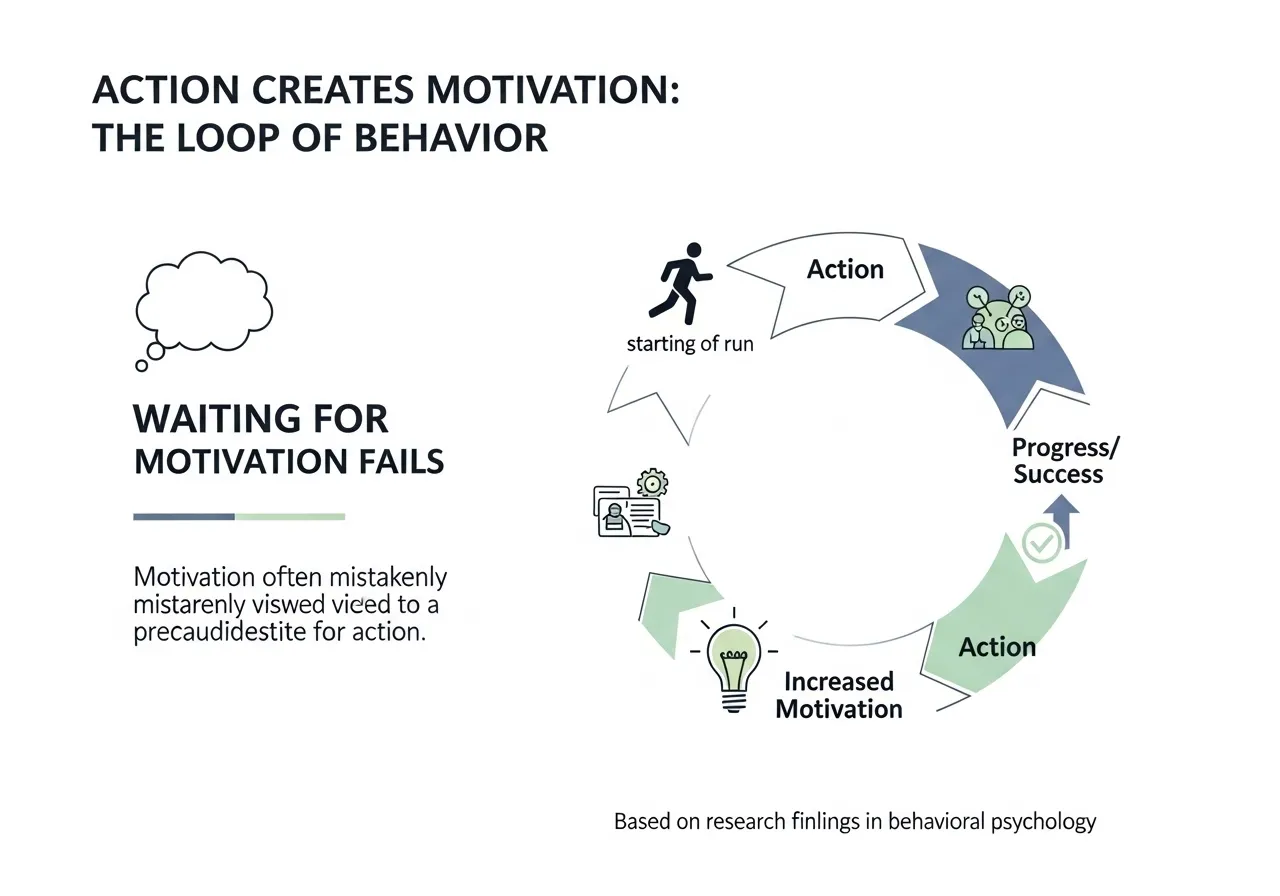
Most people treat motivation as a prerequisite for exercise — they wait until they feel like working out before they go. This approach fails reliably because motivation is not a stable state. It fluctuates with sleep quality, stress levels, mood, weather, and dozens of other factors entirely outside your control.
Research on behavior change consistently shows that the most reliable exercisers do not train because they feel motivated — they train because they have built systems and habits that make not training the harder choice. The goal is not to generate more motivation; it is to reduce dependence on it.
The Action-Motivation Loop
A counterintuitive but well-supported finding in behavior research is that action creates motivation — not the other way around. Starting a workout, even reluctantly, almost always produces the energy and positive feeling that makes continuing easy. Waiting to feel motivated before starting keeps you waiting indefinitely.
The practical application: commit to starting for just five minutes. Put on your shoes and begin. In the vast majority of cases, you will continue — because the motivational state that seemed absent before the session arrives within the first few minutes of movement.
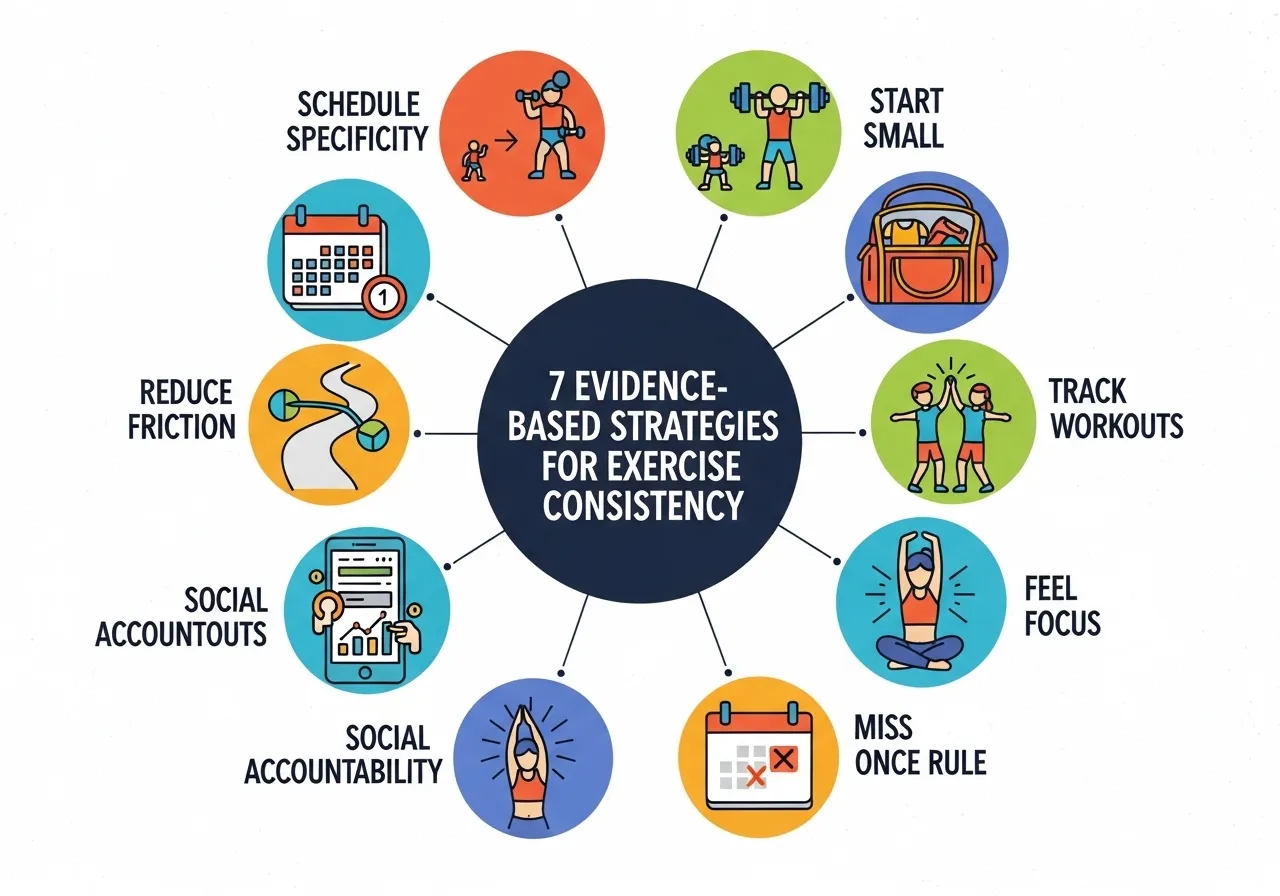
7 Evidence-Based Strategies for Long-Term Exercise Consistency
1. Make It Specific and Scheduled
Vague intentions — “I’ll exercise more this week” — produce vague results. Research on implementation intentions shows that deciding specifically when, where, and how you will exercise dramatically increases follow-through rates. Put your workout days and times in your calendar as recurring appointments and treat them with the same commitment as any other scheduled obligation.
2. Start Smaller Than You Think You Should
The most common reason new exercise habits fail is starting too ambitiously. Beginning with a 5-day-per-week intense program when you haven’t exercised in months sets an unsustainable initial demand. Start with two or three sessions per week at moderate intensity — a level that feels almost too easy — and build gradually. Consistency at a lower level compounds into far greater results than intensity that leads to burnout and quitting.
3. Reduce Friction
Every obstacle between you and starting a workout reduces the probability of training. Lay out your workout clothes the night before. Keep your gym bag packed and by the door. Choose a gym that is on your commute route rather than a detour. Schedule morning workouts if evening obligations frequently interfere.
The fewer decisions and preparations required to begin a session, the more likely the session happens — especially on low-motivation days when even small barriers feel significant.
4. Track Your Workouts
A simple training log — recording date, exercises, sets, and reps in a notebook — serves two powerful functions. First, it provides objective evidence of progress that motivates continued effort. Second, it creates a visual streak of consistency that builds its own momentum. Seeing 18 consecutive workout entries makes skipping the 19th feel like a genuine loss.
5. Train With Someone
Social accountability is one of the most robust predictors of exercise adherence in behavioral research. Knowing that someone else is expecting you at the gym or park dramatically reduces the likelihood of skipping. A training partner, a group fitness class, or even a committed friend who checks in on your progress all add meaningful accountability that motivation alone cannot match.
6. Focus on How Exercise Makes You Feel
Most people focus on external outcomes — weight loss, appearance, fitness levels — that take weeks or months to materialize. These distant rewards are poor motivators for day-to-day consistency. Instead, build awareness of the immediate positive effects of exercise: improved mood, reduced stress, better sleep quality, clearer thinking. These benefits appear within 30 minutes of finishing a session and provide immediate reinforcement for the behavior.
7. Plan for Missed Sessions
Missing a workout is not a failure — it is an inevitable part of any long-term fitness practice. The difference between people who maintain exercise habits for years and those who repeatedly restart is not that the former never miss sessions — it is that they have a predetermined response to missed sessions. The most effective rule: never miss twice in a row. One missed session has minimal impact on fitness; a week off begins to matter.
How to Rebuild After Losing Consistency
Why Getting Back Is Harder Than Starting
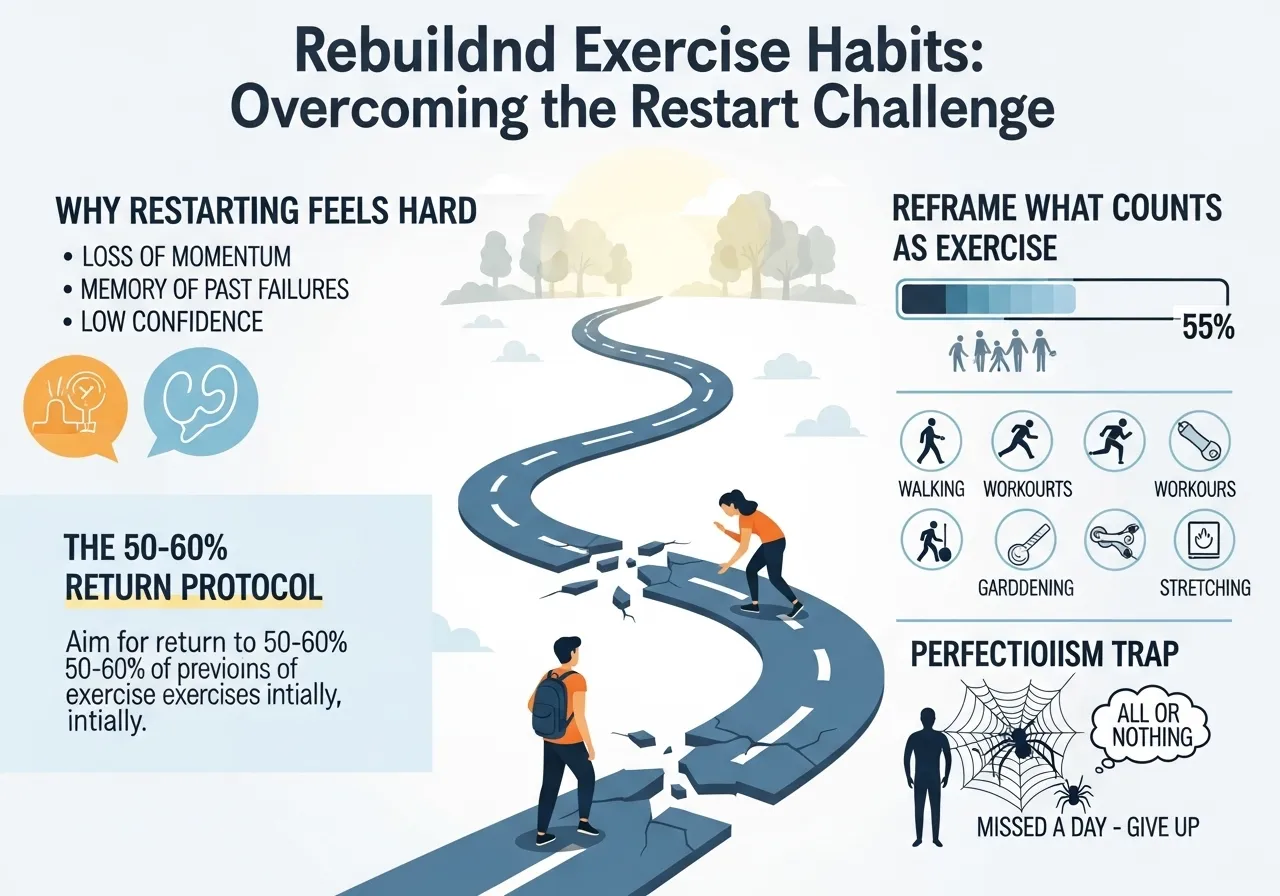
Most people find that restarting after a break feels disproportionately hard — harder, in many cases, than the original start. Part of this is physiological: some fitness is lost during extended breaks, making the same workouts that felt manageable before feel difficult again. Part is psychological: the identity of “someone who exercises” fades during absence, making return feel like starting over rather than resuming.
Understanding this makes the return easier. The difficulty is temporary and predictable — fitness returns faster the second time through any program, and the psychological barrier of “starting over” diminishes once the first few sessions are complete.
The Restart Protocol
When rebuilding after a break of any length, apply the same principle as beginning: start smaller than you think you need to. Return at 50–60% of the volume and intensity of where you left off. The goal of the first two weeks back is simply to re-establish the habit and the positive associations with training — not to recover all lost fitness as quickly as possible. That approach leads back to burnout and another break.
Reframe What Counts as Exercise
Rigid definitions of what “counts” as exercise are a common motivation killer. A 15-minute walk counts. Ten minutes of stretching counts. A short bodyweight session in the living room counts. Every instance of intentional physical activity produces some benefit and reinforces the identity of someone who prioritizes movement — even if it falls well short of an ideal training session.
Perfectionism about exercise — the belief that anything less than a full, planned session is not worth doing — is one of the most reliable paths to doing nothing at all.
Frequently Asked Questions About Exercise Motivation
What if I genuinely hate exercise?
Most people who say they hate exercise have had negative experiences with specific types of exercise — usually intense, uncomfortable activities that felt punishing rather than rewarding. The solution is not to force yourself through activities you dislike, but to find movement you find at least tolerable or enjoyable.
Hiking, dancing, swimming, recreational sports, yoga, martial arts, and group fitness classes all develop fitness. If traditional gym training feels miserable, it is worth experimenting with alternatives before concluding that exercise itself is incompatible with your preferences.
How do I exercise when I am exhausted from work?
Counterintuitively, moderate exercise is one of the most effective remedies for work-related mental fatigue. Physical tiredness and mental tiredness are different states — a brisk walk or moderate workout frequently produces more energy than it costs when the fatigue is cognitive rather than physical.
Keeping workouts shorter and lower intensity on high-fatigue days — rather than skipping entirely — maintains the habit while respecting genuine recovery needs. A 15-minute moderate session on a hard day is more valuable than a perfect 60-minute session twice a week.
Is it normal for motivation to come and go?
Yes — completely normal, and expected. Motivation naturally fluctuates with life circumstances, stress, sleep, and seasons. The goal is not to maintain constant high motivation but to build systems and habits that produce consistent behavior regardless of motivational state. Professionals in any field do not wait until they feel inspired to perform their work — they show up consistently, and the motivation often follows.
- Motivation follows action — start the workout, and motivation typically arrives within the first few minutes
- Reduce friction: schedule sessions, lay out clothes, choose convenient locations
- Social accountability dramatically improves consistency — train with someone when possible
- Never miss twice in a row — one missed session is fine; a pattern of missing is where habits dissolve
- Reframe what counts: any intentional movement reinforces the identity and habit of an active person