Daily Stretching Routine: 5 Flexibility Exercises and How to Build a Lasting Habit
Stretching is one of the most consistently skipped parts of any fitness routine — and one of the most rewarding when practiced regularly. Whether your goal is to move more freely, reduce everyday stiffness, or simply feel better in your body, a daily stretching habit delivers results that compound quietly over time.
This guide covers the five most effective stretches for daily flexibility, how long to hold each one, and how to build a routine that actually sticks.
Why Daily Stretching Makes a Difference
What Stretching Actually Does
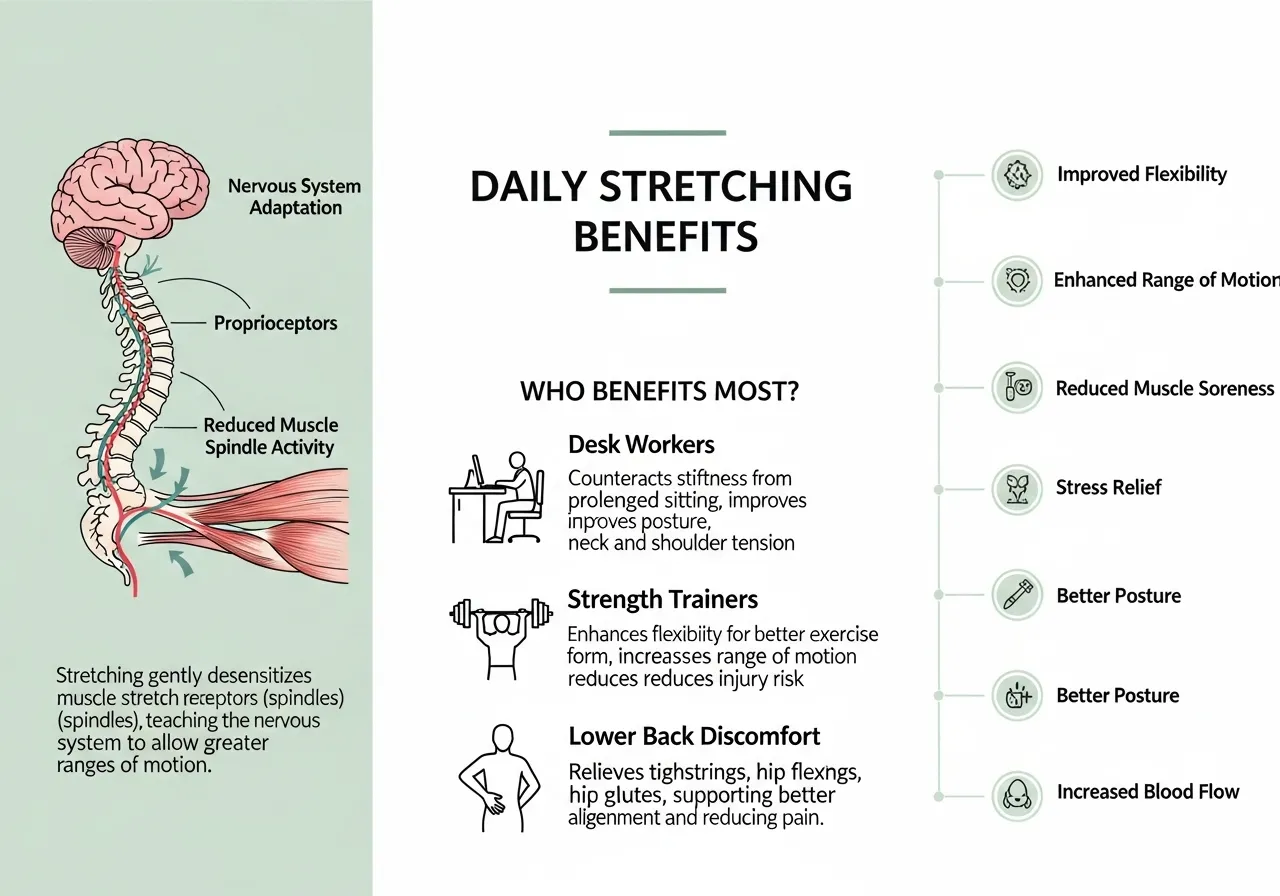
When you hold a muscle in a lengthened position for 20–60 seconds, two things happen. First, the muscle gradually relaxes as the initial protective tension releases. Second, over weeks of consistent practice, your nervous system raises its tolerance for the stretched position — allowing you to move further into the range without discomfort.
This is why stretching feels easier after a few weeks of regular practice. The muscle itself hasn’t necessarily changed dramatically, but your nervous system has learned to allow greater range of motion.
Who Benefits Most From Daily Stretching
Almost everyone benefits from regular stretching, but three groups tend to notice the most immediate improvement:
- Desk workers: Prolonged sitting tightens the hip flexors, hamstrings, and chest — three areas that directly affect posture and lower back comfort
- Strength trainers: Resistance training without flexibility work can gradually reduce range of motion over months and years, limiting exercise technique and recovery quality
- People with lower back discomfort: Tight hip flexors and hamstrings are among the most common contributing factors to lower back stiffness — stretching both areas frequently produces noticeable relief for many people
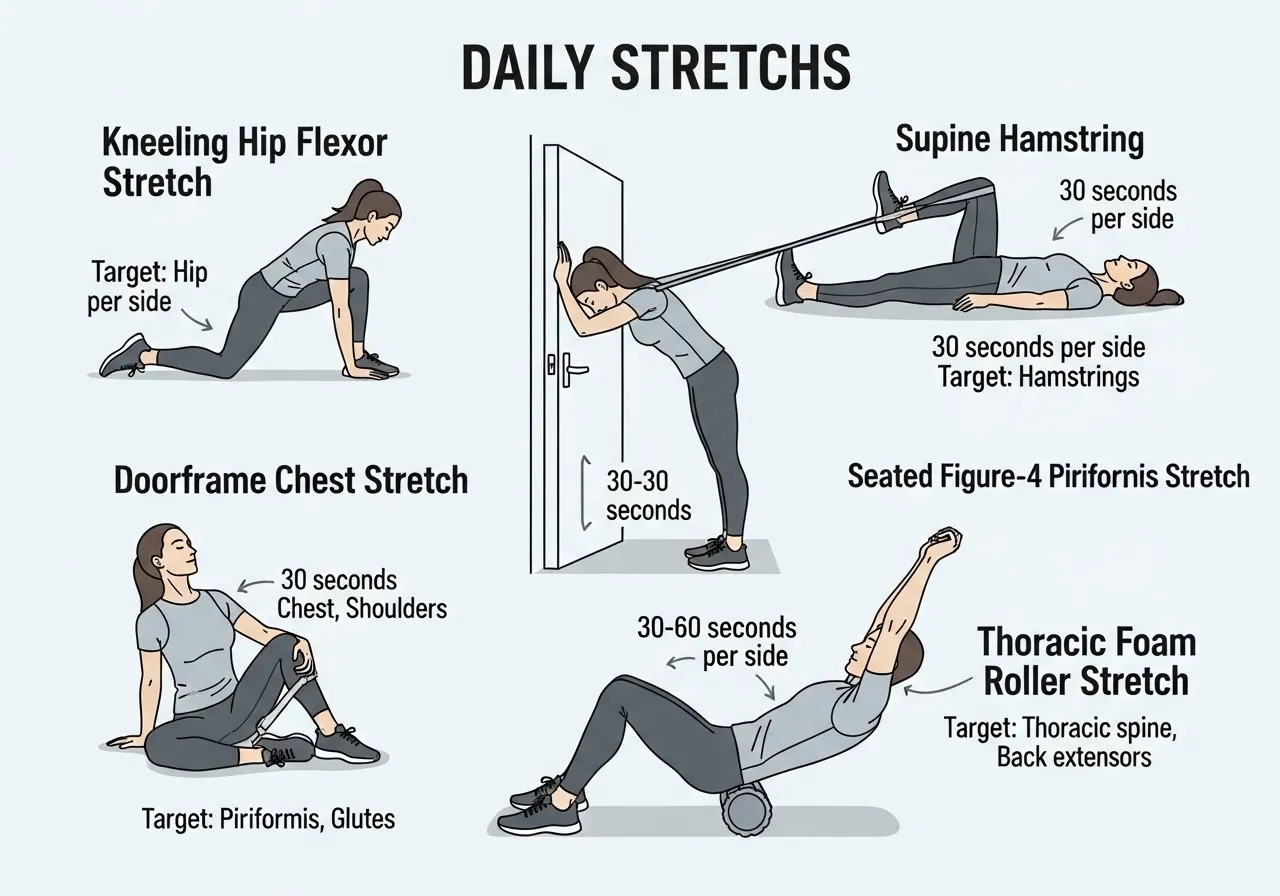
The 5 Best Daily Stretches
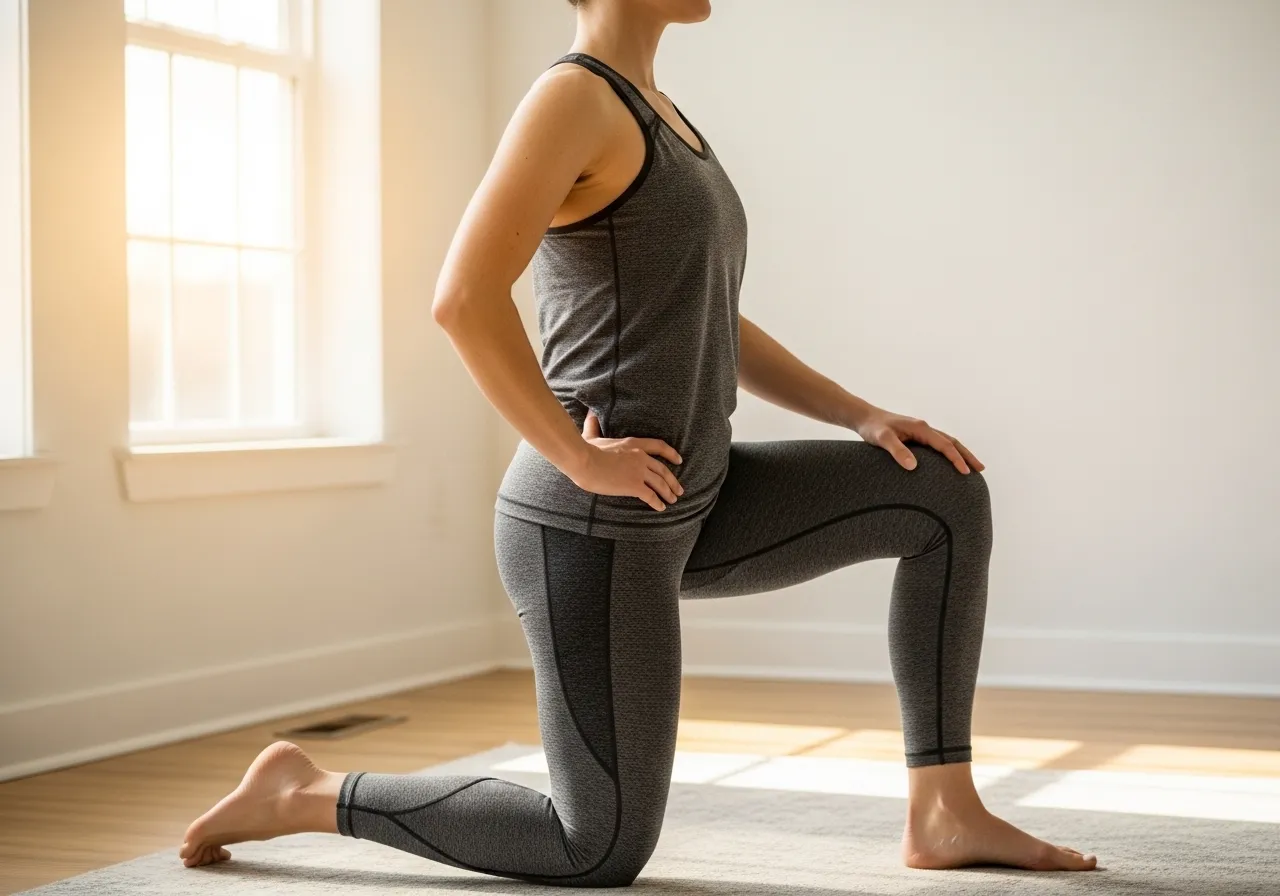
1. Kneeling Hip Flexor Stretch
Kneel on one knee with the other foot forward, creating a 90° angle at both knees. Gently push your hips forward until you feel a stretch at the front of the kneeling leg’s hip. Keep your torso upright and squeeze the glute of the kneeling leg to deepen the stretch.
Hold: 45 seconds each side | Target: Hip flexors, psoas
This is arguably the single most important stretch for people who sit regularly. Tight hip flexors tilt the pelvis forward, which compresses the lower back and affects posture throughout the day.
2. Supine Hamstring Stretch
Lie on your back and lift one leg toward the ceiling, keeping the other leg flat on the floor. Hold the back of the thigh with both hands and gently pull the leg toward your chest until you feel a stretch along the back of the raised leg. Keep the knee slightly soft — not locked straight.
Hold: 45 seconds each side | Target: Hamstrings, lower back
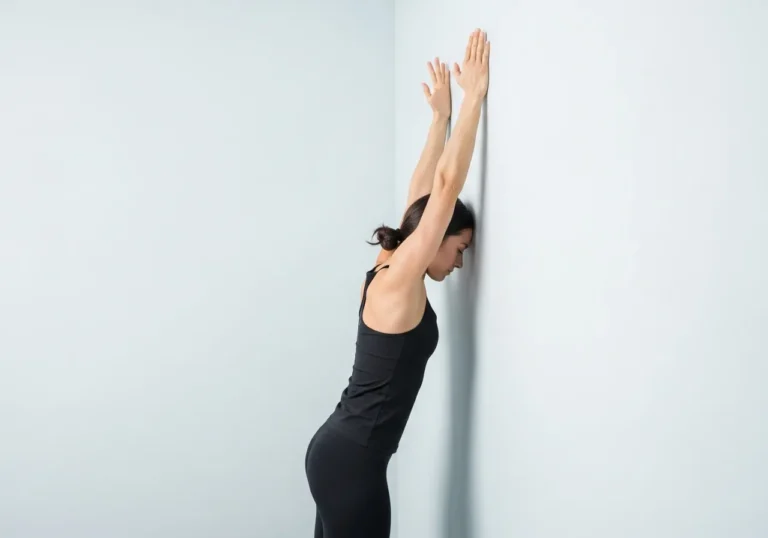
3. Doorframe Chest Stretch
Stand in a doorway and place your forearms on the frame, elbows at shoulder height. Step one foot forward and gently lean through the doorway until you feel a stretch across the front of your chest and shoulders. Keep your chin slightly tucked.
Hold: 45 seconds | Target: Pectorals, anterior shoulders
This stretch counteracts the forward shoulder rounding that develops from prolonged desk work, driving, and phone use — making it particularly valuable for anyone who works at a computer.
4. Seated Piriformis Stretch (Figure-4)
Sit in a chair and cross one ankle over the opposite knee, creating a figure-4 shape. Keeping your back straight, gently lean forward from the hips until you feel a stretch in the crossed leg’s outer hip and glute area.
Hold: 45 seconds each side | Target: Piriformis, hip external rotators
The piriformis and surrounding hip rotators are commonly tight in both sedentary and active individuals — tightness here contributes to hip discomfort, restricted walking mechanics, and referred pain down the back of the leg in some cases.
5. Thoracic Extension Over Foam Roller
Place a foam roller perpendicular to your spine at mid-back level. Sit on the floor in front of it and lean back over the roller, supporting your head with your hands. Allow your upper back to extend gently over the roller for the full hold duration. Move the roller up and down the thoracic spine (mid-back) between holds.
Hold: 30–45 seconds per position | Target: Thoracic spine, upper back extensors
If you don’t have a foam roller, a tightly rolled towel placed across your mid-back works as an accessible substitute.
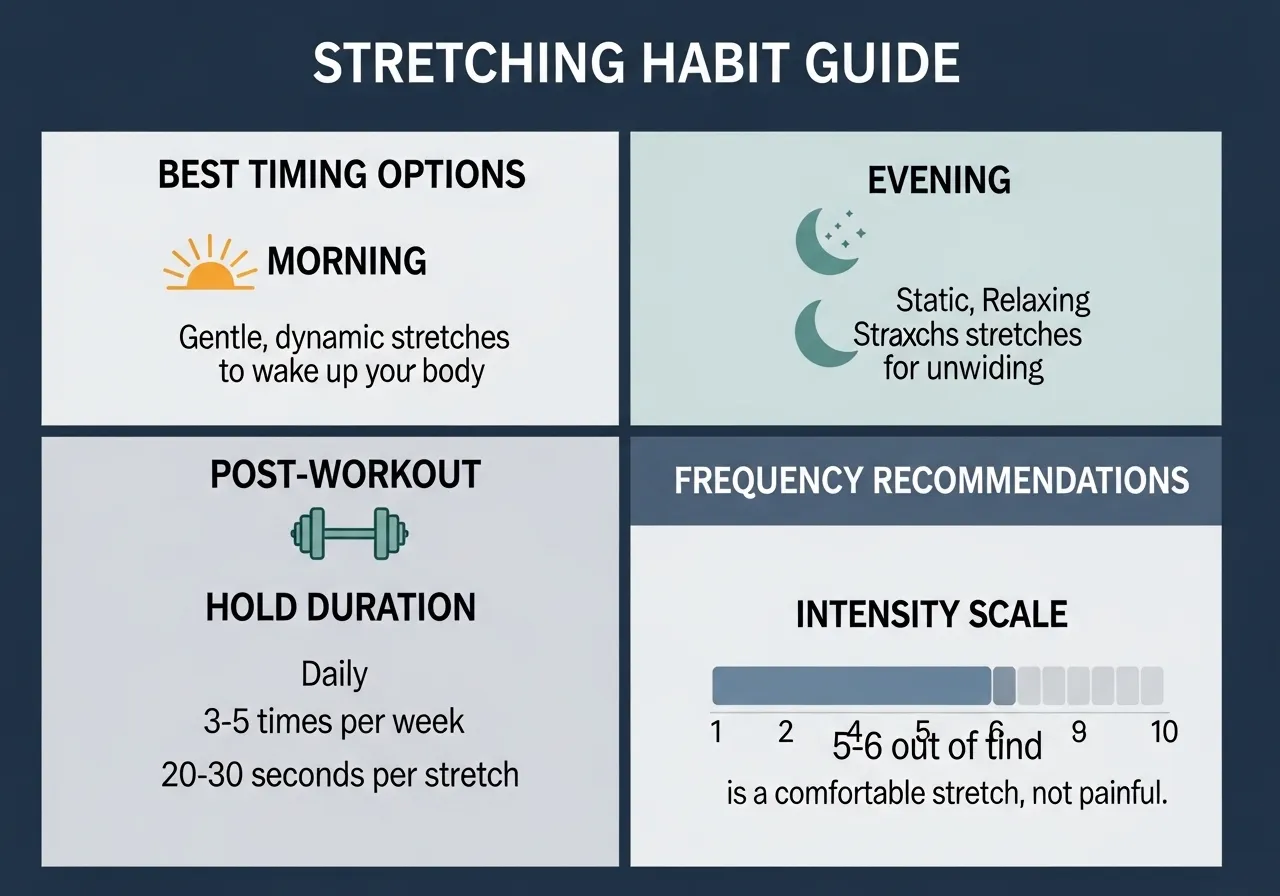
How to Build a Daily Stretching Habit
When to Stretch
The best time to stretch is the time you will actually do it consistently. That said, a few timing principles are worth knowing:
- Morning: Stretching after waking helps counteract overnight stiffness and sets a positive tone for the day. Muscles are slightly less pliable first thing in the morning — use slightly gentler intensity than evening sessions.
- Evening: Muscles are typically most flexible in the evening after a day of activity. Evening stretching also has a calming effect that many people find helpful for sleep quality.
- After exercise: Post-workout stretching takes advantage of elevated muscle temperature for greater flexibility gains. This is the most physiologically optimal time for static stretching.
How Long and How Often
For general flexibility improvement, 10–15 minutes of stretching performed daily — or at minimum five days per week — produces consistent results over 4–8 weeks.
Hold each stretch for 30–60 seconds. Two to three repetitions per muscle group per session is sufficient for most people. The key variable is consistency across days and weeks — one long stretching session per week produces far less adaptation than five shorter sessions.
Intensity: How Deep Should You Stretch
Stretch to a feeling of mild-to-moderate discomfort — a 5–6 out of 10. You should feel a clear stretch sensation, but not sharp pain. If you cannot breathe normally through the stretch, you are probably pushing too hard. Back off slightly until breathing is easy and try to relax into the position.
Sharp pain during stretching is a signal to stop — not push through. Gentle, progressive stretching practiced consistently is far more effective than aggressive stretching that produces pain and discourages regular practice.
Common Questions About Daily Stretching
How long until stretching feels easier?
Most people notice their stretches becoming more comfortable within 2–3 weeks of daily practice. Genuine range of motion improvements — being able to reach noticeably further or move with less restriction — typically become clear after 4–6 weeks.
Flexibility gains are not permanent. If you stop stretching regularly, range of motion gradually returns toward its pre-training baseline over several weeks. Building stretching into a daily routine, rather than practicing it in focused blocks, is the most effective long-term approach.
Is stretching before exercise safe?
Short static stretches of 20–30 seconds performed before exercise are fine for most recreational activities. Very long holds immediately before power activities like sprinting or heavy lifting may temporarily reduce force output — so keep pre-workout stretching brief and follow it with some dynamic movement before your main activity.
Can stretching help with lower back pain?
For many people with general lower back stiffness — not acute injury or diagnosed conditions — regular stretching of the hip flexors, hamstrings, and piriformis produces noticeable improvement in lower back comfort. These muscles attach directly to the pelvis and spine, and chronic tightness in any of them can contribute to compression and restricted movement.
Anyone with diagnosed spinal conditions, recent injury, or pain that worsens with stretching should consult a physiotherapist before continuing.
- 10–15 minutes of daily stretching produces clear flexibility improvements within 4–6 weeks
- Hold each stretch for 30–60 seconds at a 5–6 out of 10 discomfort level
- The hip flexor, hamstring, chest, hip rotator, and thoracic spine are the highest-priority areas for most adults
- Consistency across days matters far more than session length