
How to Lose Body Fat Through Exercise: Evidence-Based Strategies That Work
Body fat loss through exercise is one of the most sought-after fitness goals — and one of the most misunderstood. Marketing has created a landscape full of “fat-burning” workout claims that frequently contradict what exercise physiology actually shows.
This guide explains how exercise contributes to fat loss, what types of training are most effective, and how to set realistic expectations based on the evidence.
How Exercise Contributes to Fat Loss
The Fundamental Mechanism
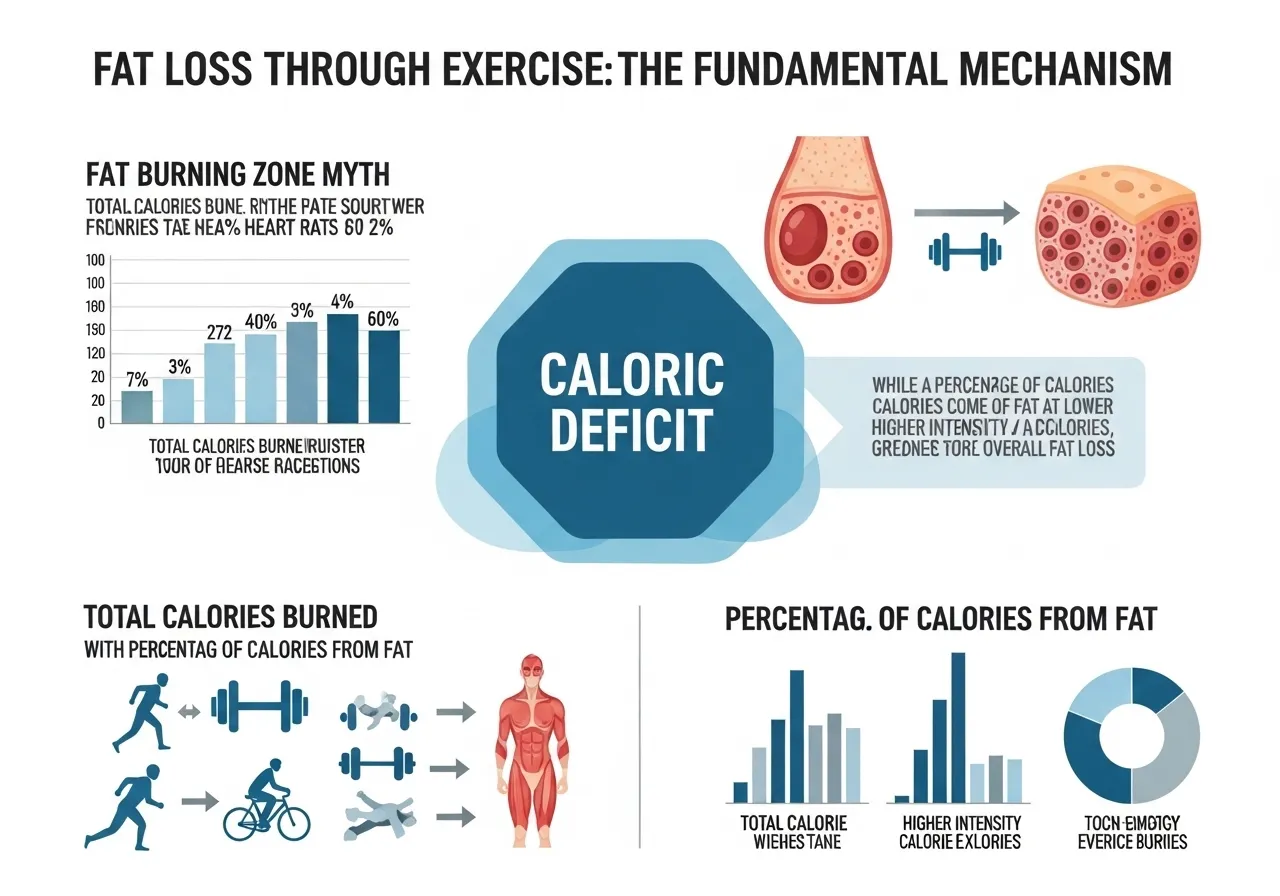
Fat loss occurs when the body uses stored fat as an energy source — which happens when energy expenditure exceeds energy intake over time. Exercise contributes to this process primarily by increasing total energy expenditure — the calories burned during the session and the modest elevation in metabolic rate that follows.
The critical point that fitness marketing often obscures: exercise alone, without attention to caloric intake, typically produces modest fat loss results at recreational training volumes. The research is consistent on this — diet is the primary driver of fat loss, and exercise is a powerful supporting tool. Combined, they are significantly more effective than either alone.
Which Exercise Burns the Most Fat?
The concept of a “fat-burning zone” — the idea that low-intensity exercise burns more fat than high-intensity exercise — is technically accurate but practically misleading. While moderate-intensity activity uses a higher percentage of fat as fuel during exercise, high-intensity activity burns significantly more total calories — producing greater total fat oxidation despite a lower fat percentage contribution.
From a practical standpoint, total caloric expenditure per session is a more useful metric than fat-burning percentage. Exercise that you can perform consistently and that burns meaningful total calories is the most effective for fat loss — regardless of intensity label.
The Most Effective Exercise Approaches for Fat Loss
Strength Training: The Underrated Fat Loss Tool
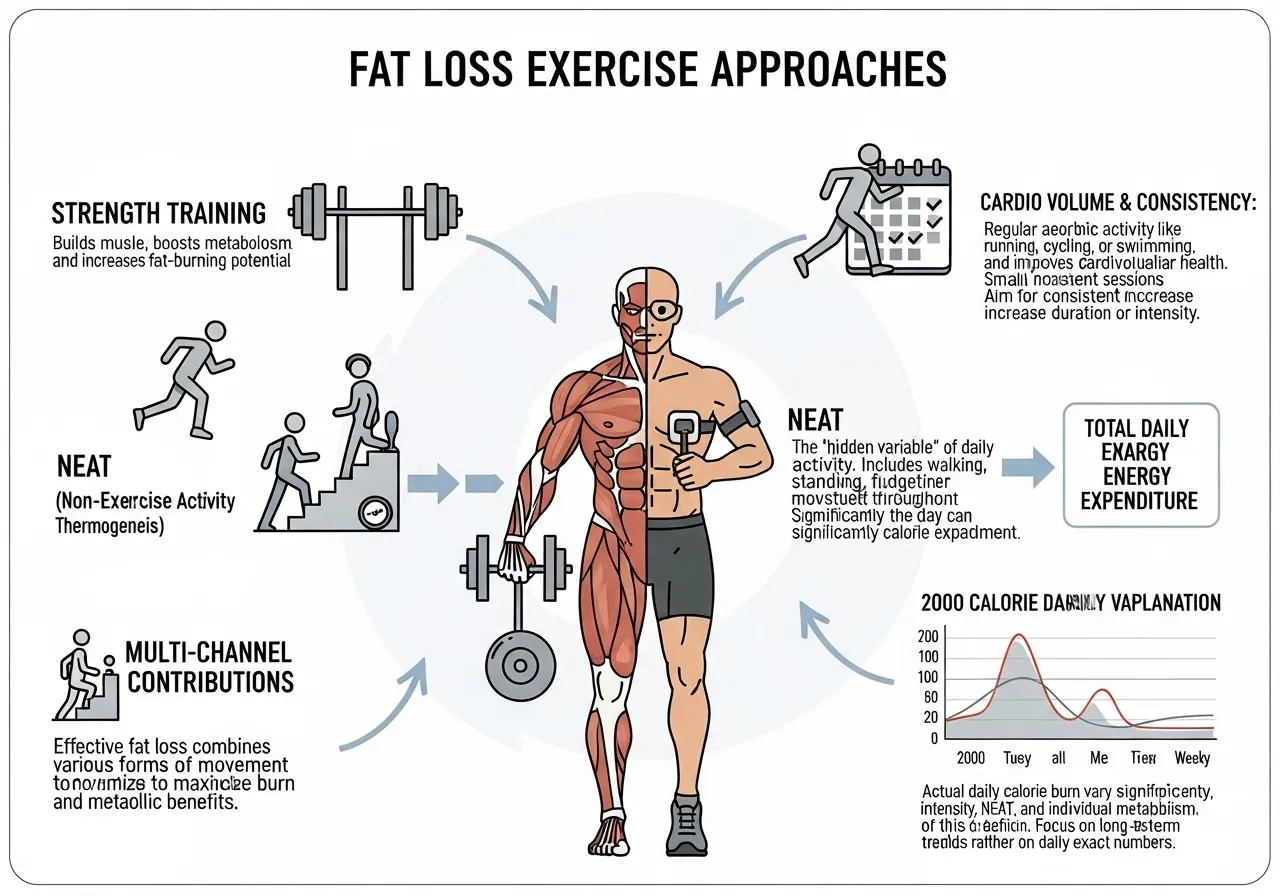
Strength training is consistently undervalued in fat loss discussions that focus primarily on cardio. Its fat loss contributions operate through multiple channels:
- Caloric expenditure during sessions: Heavy compound lifting burns significant calories — comparable to moderate cardio per unit of time in many protocols
- Elevated post-exercise metabolism: Strength training produces meaningful EPOC — elevated caloric burn for hours after training ends
- Muscle mass preservation: During caloric deficit, strength training signals the body to preserve muscle tissue and preferentially lose fat — without resistance training, a significant portion of weight lost during caloric restriction comes from muscle
- Long-term metabolic rate: Maintaining or increasing muscle mass keeps resting metabolic rate elevated, supporting fat loss over weeks and months
Cardio: Volume and Consistency Over Intensity
For fat loss specifically, total weekly caloric expenditure from cardio matters more than the specific format. A person who walks briskly for 45 minutes five times per week burns more total calories — and loses more fat — than someone who performs two exhausting HIIT sessions and is too tired for anything else.
The most sustainable cardio approach for fat loss combines moderate-intensity steady-state work (3–5 sessions per week) with 1–2 HIIT sessions for variety and VO2 max maintenance. This structure produces consistent weekly caloric expenditure without the recovery demands that prevent higher-intensity-only approaches from being sustainable.
Non-Exercise Activity: The Hidden Variable
Non-exercise activity thermogenesis (NEAT) — the calories burned through all movement outside of deliberate exercise — is often more significant than exercise in determining total daily energy expenditure. Walking, taking stairs, standing, fidgeting, and general daily movement contribute substantially to caloric balance.
Research has shown that NEAT can vary by up to 2,000 calories per day between individuals of similar size — a range that dwarfs the caloric impact of most recreational exercise sessions. Increasing daily movement through conscious habit changes (parking further away, taking stairs, standing during phone calls) produces meaningful cumulative caloric expenditure.
Realistic Expectations for Exercise-Driven Fat Loss
What Exercise Realistically Contributes
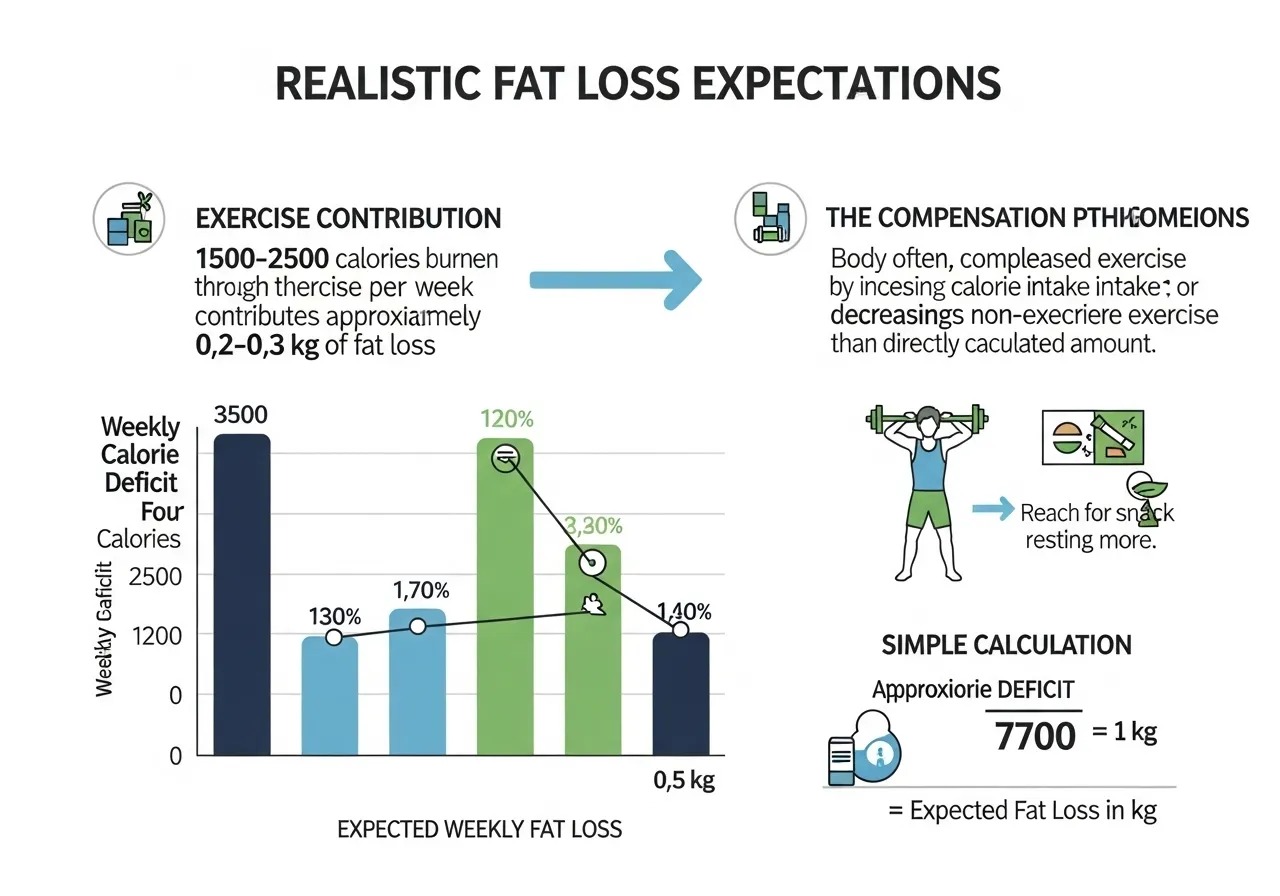
A dedicated recreational exerciser performing 4–5 sessions per week of mixed cardio and strength training might burn 1,500–2,500 extra calories per week through exercise. At 7,700 calories per kilogram of fat, this represents approximately 0.2–0.3 kg of fat loss per week from exercise alone — before accounting for any dietary changes.
This is meaningful and significant over months, but it highlights why diet remains the primary fat loss lever. Eliminating 300–500 calories per day from intake achieves similar results with less physical demand — and combining both approaches multiplies the effect.
The Compensation Problem
A well-documented phenomenon in fat loss research is exercise-induced compensation — the tendency for increased exercise to be partially offset by increased appetite, reduced non-exercise activity, and subconscious behavioral changes that limit the expected caloric deficit.
This does not mean exercise is ineffective for fat loss — it means expectations should be calibrated realistically. Tracking both exercise and food intake honestly provides the clearest picture of actual progress and allows adjustments when expected results do not materialize.
Fat Loss and Exercise: Common Questions
Is it possible to spot-reduce fat from specific areas?
No — spot reduction is one of the most persistent myths in fitness. The body determines where it stores and mobilizes fat based on hormonal and genetic factors, not based on which muscles are being exercised nearby. Abdominal exercises develop abdominal muscles, but they do not preferentially burn the fat covering them. Total body fat loss from consistent caloric deficit is the only reliable approach to reducing fat in any specific area.
How much cardio do I need for fat loss?
There is no universal prescription, but a practical starting point for most people is 150–300 minutes of moderate-intensity cardio per week — broadly consistent with general health guidelines and sufficient to produce meaningful caloric expenditure when combined with attention to diet. This can be accumulated across 4–6 sessions of 30–45 minutes rather than needing to be performed in single long efforts.
Will I lose muscle if I do a lot of cardio?
Excessive cardio combined with significant caloric restriction can cause muscle loss — particularly when protein intake is inadequate and strength training is absent. The protective factors are: adequate protein intake (1.6–2.2 g per kg of bodyweight), regular strength training to signal muscle preservation, and avoiding severe caloric deficits (more than 500–700 calories per day below maintenance for extended periods).
- Exercise contributes to fat loss primarily through increased caloric expenditure — diet remains the primary lever
- Strength training preserves muscle during fat loss and elevates metabolism — do not skip it for cardio alone
- Total weekly caloric expenditure from cardio matters more than intensity format
- Spot reduction is a myth — total body fat loss is the only path to reducing fat in specific areas
- Increasing daily non-exercise movement (NEAT) contributes meaningfully to caloric balance